
General dentist · Founder of Molar Town · Novi, Michigan
Meet Dr. Diana McQuirter.
The part of dentistry I love most is the moment a patient truly understands what I see, why it matters, and what we can do next. I created Molar Town to make more room for that kind of care: thoughtful, private, quality-focused, and supported by a complete, high-quality record you can access and understand.
- Detroit born
- B.S. + D.D.S. · University of Michigan
- 12+ years in practice
- Degree in education
- Founder, Molar Town
The point of view
Independent by design.
Listening, looking carefully, and explaining until it makes sense: those are the parts of dentistry that matter most, and they’re usually the first to go when an office values speed and production over understanding. Time with a patient isn’t an inefficiency to manage. It’s part of the care.
I didn’t start with a standard dental-office template and ask how to improve it. I started with the person in the chair. What do you need to feel comfortable, understand what I see, and make a thoughtful decision without being rushed? From there, I designed the appointment, the room, the pricing, the technology, and the record around that. Nothing earned a place just because it was standard. Every choice had to make the care clearer, calmer, more private, or more complete.
Teaching is part of who I am. I have a degree in education as well as dentistry, and it shows: I’d rather show you what I see and explain it plainly than ask you to take my word for it. That’s also the thinking behind DentalDNA, your take-home report. I write it myself, turning what I found into plain language. Not a summary you’re handed and forget. Something written to be read.
The road to Molar Town
From Detroit to Novi Road.
Curiosity came first
I grew up in a city of builders, and grew up curious about how the things around me actually worked. That habit never wore off. It just found a subject.
University of Michigan, twice
First a Bachelor of Science, then a Doctor of Dental Surgery. Dentistry turned out to be the right fit. It takes precision, problem-solving, and good hands, and the person you’re doing it for is right there in the chair.
Twelve years, one growing list
Over twelve years in practice, I kept a detailed list: more time, real privacy, clear answers, honest pricing, and records patients could actually understand and keep. I saw how often good dentistry got harder because of systems built for speed, information scattered across offices, and decisions patients were asked to make before they had the full picture. That list became Molar Town.
The list becomes a place
In 2026, the plan got an address: 23890 Novi Road. The building had the location, the size, and the bones to hold the whole vision for Molar Town, so I started rebuilding it from the patient’s point of view: six fully private, science-inspired suites, with every finish, fixture, technology, and system chosen on purpose. Good care is shaped by more than what happens in the chair. The room, the tools, the privacy, the time, and the smallest details all matter.
The doors open
Molar Town welcomes its first patients. Every detail you notice, and plenty you won’t, traces back to that list.
The science suites
Every treatment room is named for a science.
Every suite is fully private: a real door, and a comfortable seat for someone you trust. Each one is also built around a field of science I love. Open a room and I’ll tell you why, and what it has to do with your teeth.
Curiosity
Astronomy · Space exploration & tourismWhy the calcium in your enamel is older than the sun.

Space is where my curiosity began, and nothing has ever stretched that feeling wider than the night sky. Long before dentistry, I was the kid who wanted to know how everything worked, and the universe is the biggest version of that question there is.
Carl Sagan is the reason it stuck. He taught me that wonder and rigor belong together, he never once talked down to anyone, and he believed the kindest thing you can do for a person is help them find their place in something vast. Stephen Hawking and Jared Isaacman share this room with him: one refused to keep the hardest questions in the universe among physicists, and the other proved you don’t have to be a professional astronaut to go to orbit. I want the kid in this chair to grow up assuming they could go.
Carl Sagan, Stephen Hawking & Jared IsaacmanAstronomy · Space exploration
“The sky calls to us.”
Carl Sagan · CosmosSagan’s most famous line isn’t poetry. It’s an inventory. The calcium and phosphorus in your enamel were made inside stars that died before the sun was born, and you brought them to the appointment. Bone works the same way in orbit as it does in your jaw: it’s constantly torn down and rebuilt depending on how hard it’s working. That’s why astronauts lose bone in space, and why I ask about bone health before we plan anything.
Innovation
Engineering & roboticsThe fastest machine you’ll ever have in your mouth, and why it sprays water.
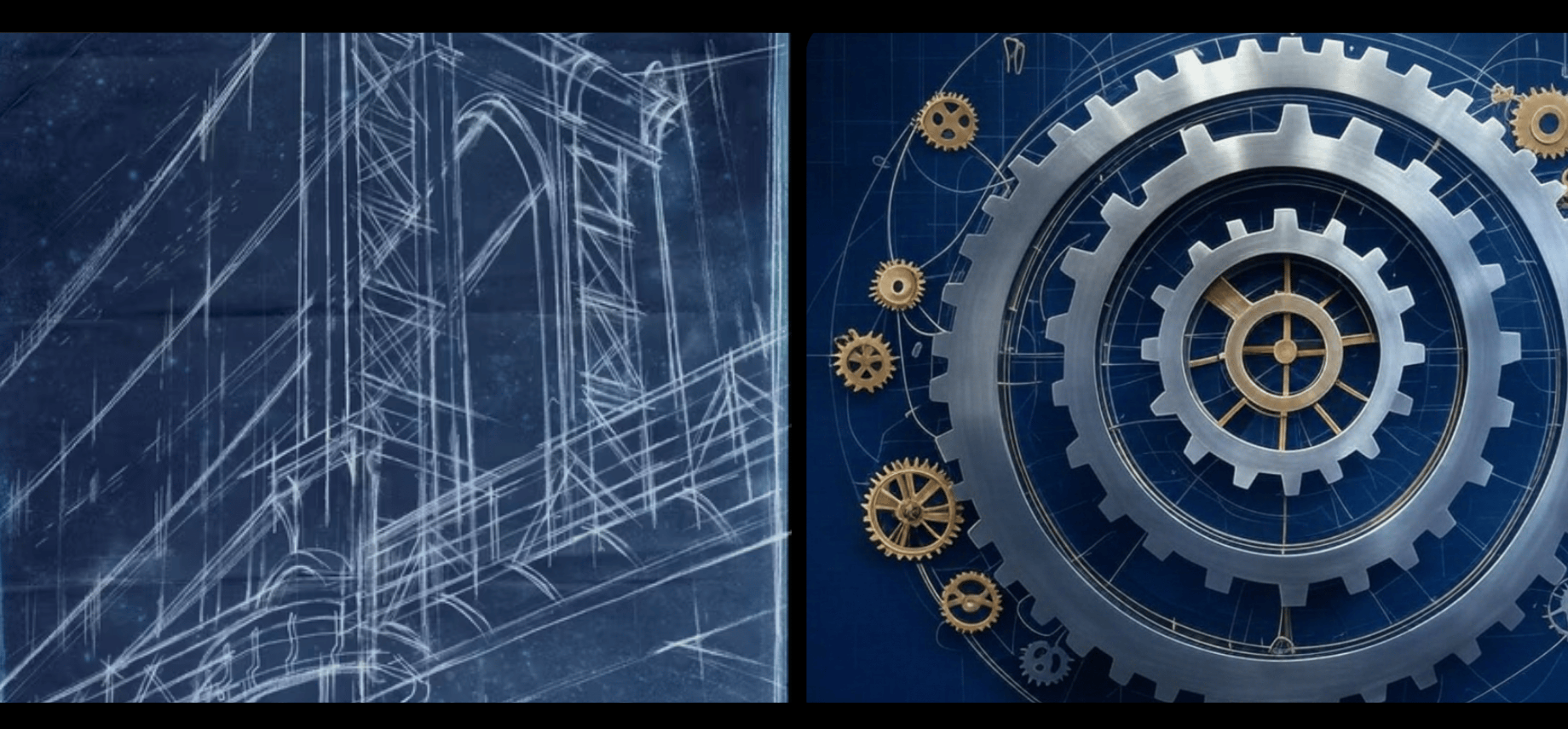
I’m a builder at heart. Detroit is a city that makes things, and I’ve always been drawn to engineers who look at a hard problem and decide it’s worth doing anyway. What I admire in Elon Musk’s companies is the method: start from what physics allows, throw out what everyone assumes a thing has to cost, and rebuild from there. That’s how a rocket stopped being something you throw away after one flight and became something you land and fly again.
MIT is the other reason this room exists. Its motto is mens et manus, mind and hand: understanding isn’t finished until you’ve made something that has to work in the real world. That’s how this building was designed. I sketched every room by hand, down to where each fixture sits, and asked what every inch was for, instead of how a dental office usually does it. If you never notice a single one of those decisions and simply feel taken care of, it worked.
Elon Musk & Robotics at MITFirst-principles engineering · Mind and hand
“Science is discovering the essential truths about what exists in the Universe, engineering is about creating things that never existed.”
Elon MuskThe drill, which we call a handpiece, isn’t a motor with a bit on the end. It’s an air turbine, and at full speed it spins past 400,000 revolutions a minute, more than twenty times a Formula 1 engine at redline. That water spray isn’t a rinse. It’s the cooling system: friction at that speed heats the tooth, and the living nerve inside can only take a few degrees. The water is why the nerve survives the appointment.
Energy
Physics · Gravity, electricity & particlesWhat the blue light is really doing, and why cold hurts.
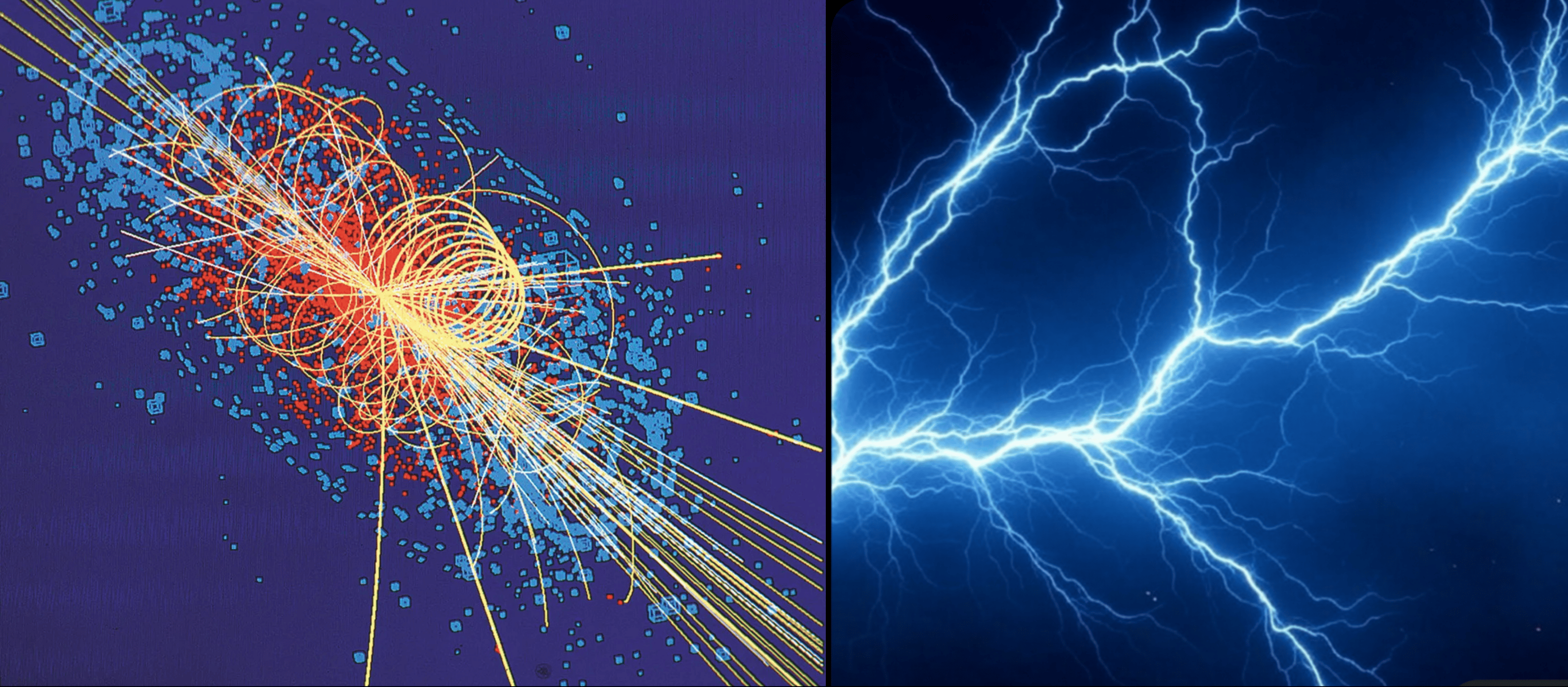
Physics is the layer underneath everything: the invisible rules that make a tooth, a heartbeat, and a galaxy all answer to the same math. I find that thrilling.
This room has two heroes. Nikola Tesla saw electricity as a raw force waiting to be harnessed for people, and pushed it until the world ran on it. Richard Feynman made the deepest ideas in the universe feel playful and clear to anyone who asked. He’s the reason I believe explaining well is a form of respect, not a favor. Understanding how reality is put together shouldn’t be intimidating. It’s a gift.
Nikola Tesla & Richard FeynmanElectric innovation · Particle physics
“What I cannot create, I do not understand.”
Richard Feynman · found on his blackboard, 1988Physics is most of what happens to you here. The blue light that hardens a white filling isn’t heat. It’s one very specific shade of blue waking up a molecule that locks the soft resin into a solid. The tool that cleans your teeth vibrates faster than your ears can hear. And cold hurts because the layer under your enamel is full of microscopic tubes of fluid that run to the nerve. Cold makes the fluid move, and the nerve reads movement as pain. The fix is to plug the tubes.
Connection
Computer science & AIThe software that reads your X-ray, and who still decides.

This is the fastest changing science, and the one that most shaped how I built Molar Town. The idea that runs through all of it: use computers to extend what people can do, never to replace them.
Alan Turing started it by asking, seriously and before anyone else, what it would even mean for a machine to think. Demis Hassabis is where I watch it land. His team built AlphaFold, which solved a problem biologists had wrestled with for fifty years (predicting the shape a protein folds into) and won a Nobel Prize in Chemistry in 2024. That’s the version I care about. Not a machine that talks. A machine that hands biology back to biologists.
Alan Turing & Demis HassabisComputer science · Artificial intelligence
“We can only see a short distance ahead, but we can see plenty there that needs to be done.”
Alan Turing · Computing Machinery and Intelligence, 1950Software can now read a dental X-ray alongside me, marking possible decay and bone loss. It makes an argument. It doesn’t make the call. I do, and you’ll see what it saw on your own screen. The same kind of software keeps your records straight and turns what I found into plain language in the background, so my attention stays where it belongs. Not on a screen. On you.
Helix
Biology & geneticsThe one tissue in your body that can’t heal itself.

The more I learned about biology, the more I believed people deserve to understand their own bodies, not just be told about them.
Two scientists share this room, decades apart. Rosalind Franklin’s X-ray images revealed the shape of DNA itself, often without the credit she was owed. Jennifer Doudna picked up where she left off and helped turn CRISPR into a precise tool for editing the code of life, work that won the 2020 Nobel Prize in Chemistry, the recognition Franklin never got. First we learned to see the code of life. Then to read it. Now, to change it. That’s the lineage DentalDNA is named for. In this room, what I find doesn’t stay in my chart. It goes home in yours.
Rosalind Franklin & Jennifer DoudnaThe structure of DNA · CRISPR gene editing
“Science and everyday life cannot and should not be separated.”
Rosalind FranklinEnamel is the hardest thing your body makes, and the only tissue in it with no living cells. It can take minerals back, but it can’t rebuild itself, which is why prevention here isn’t a lecture. It’s the whole strategy. And the goal was never a sterile mouth. Around seven hundred kinds of bacteria live in there, and most of them are harmless or even helpful. The goal is a balanced mouth, which is a very different conversation.
Catalyst
Chemistry & biomaterialsFluoride, titanium, gold: the periodic table, in your mouth.
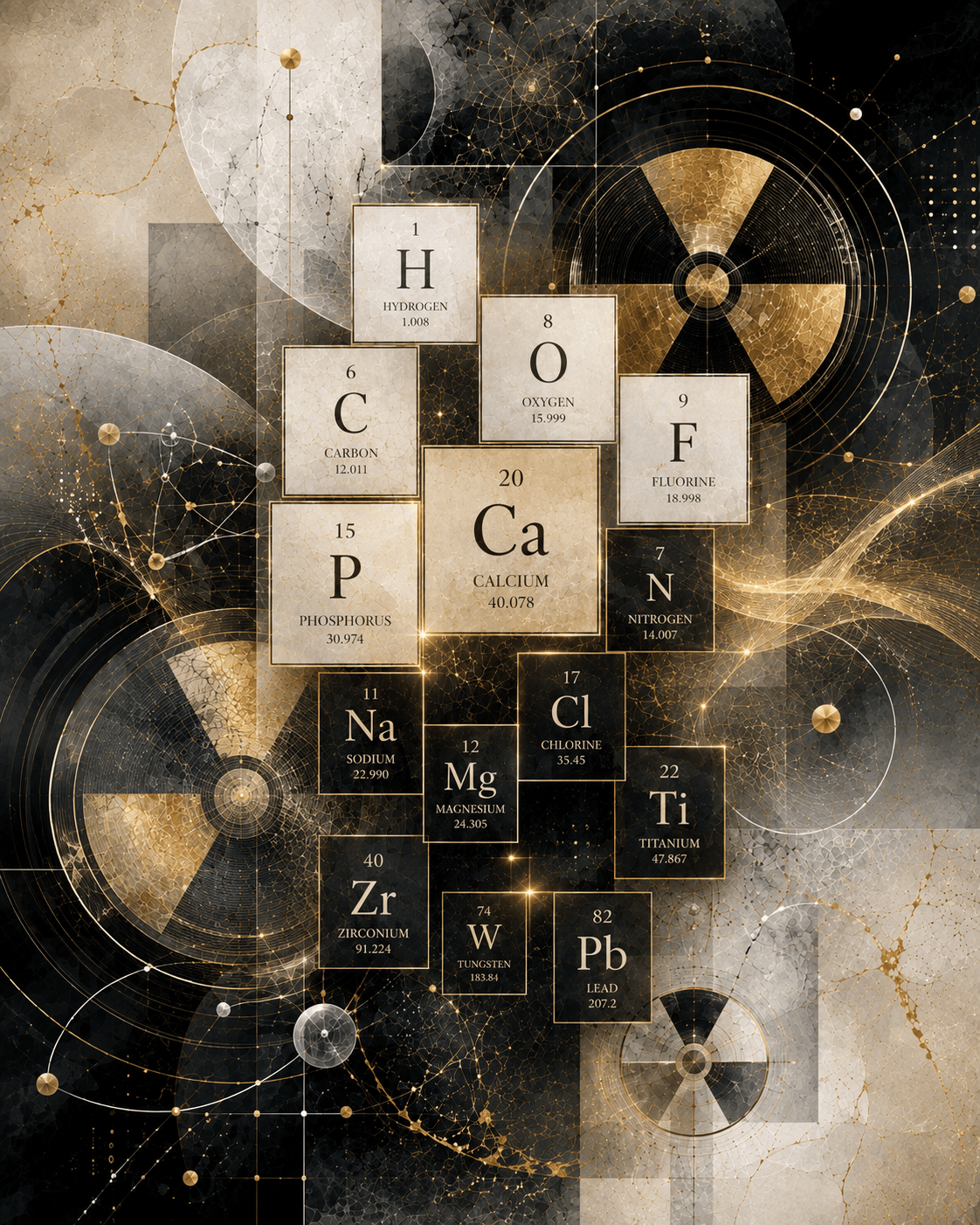
Dentistry is applied chemistry. Everything I put in your mouth is a biomaterial, chosen to live inside a human body for years and behave itself: bonding to tooth, surviving heat and cold and acid and the full force of your bite, and staying kind to the tissue around it. Choosing well is quiet, unglamorous work, and it’s the difference between something that lasts five years and something that lasts twenty.
Dmitri Mendeleev found the hidden order behind the elements and left blanks in his table for the ones nobody had discovered yet. I love that idea, that behind something that looks complicated there’s an elegant pattern quietly waiting to be seen. Marie Curie added two elements of her own, gave radioactivity its name, and is still the only person who’s won Nobel Prizes in two different sciences.
Dmitri Mendeleev & Marie CurieThe periodic table · Radioactivity
“The edifice of science not only requires material, but also a plan.”
Dmitri Mendeleev · The Principles of ChemistryCurie belongs in a dental office for a reason. During the First World War she built X-ray equipment into cars, learned to drive, and took them to the front, so the imaging came to the wounded instead of the other way around. That’s how this room works: the X-ray comes to your chair. She also paid for that work, years around radiation before anyone understood what it did, so every safeguard here exists because of what she didn’t have: digital sensors that need a fraction of the dose film once did, proper shielding, and one rule. The smallest dose that answers the question, and you’ll know what the question is before we take the image.
These are the elements doing the work. Every one of them was a decision.
With phosphorus, the crystal your enamel is built from.
The other half of that crystal, and of your bone.
Swaps into the crystal and makes it far harder to dissolve.
The glass filler that gives a white filling its strength and polish.
Implants. Living bone grows directly onto its surface and holds.
Zirconia, the tough white ceramic behind a modern crown.
Still one of the gentlest materials on the tooth biting against it. Also, as it happens, the colour on our sign.
Scan the QR code in any room and my explainers open right on your phone, turning time in the chair into time well spent.
“We are made of star-stuff.”
Carl Sagan · Cosmos, 1980. The spirit behind every room.Beyond the chair
A scientist, a musician, and a lifelong fan of the stars.
When I’m not at work, I’m making things: original music across nearly every genre, and short science films that turn big ideas, from how a tooth heals to how we’ll one day live on the Moon, into something delightful.
I follow the new space age the way some people follow sports, and I almost always have a documentary or a favorite working scientist to recommend. Most of it happens with my family in tow: museums, lake days, science centers, and the occasional ridiculous photo op.
Growing curiosity in NoviIn the fall you’ll also find me coaching a FIRST LEGO League Explore team here in Novi, with a few other parent volunteers. Watching a kid explain how their LEGO model works is my favorite kind of science communication. It’s also where Molar Town’s community giving is headed: Novi’s FIRST robotics program, from the youngest LEGO builders to the high school teams.

Off duty. Science centers, lake days, and Michigan Saturdays.
In writing
What Molar Town stands for.
MissionTo give every patient clarity, confidence, and ownership of their oral health through meticulous diagnosis, honest communication, purposeful technology, and individualized care.
VisionTo set a new standard for dentistry where advanced care feels human, trust is earned through evidence and transparency, and patients understand their health and own their information.
How we workWe are curious, honest, prepared, and meticulous. We show the evidence, educate without pressure, design for comfort, verify rather than assume, and speak up to protect the patient. Safety, quality, and trust come before speed or production.
- Ethics
- Transparency
- Quality
- Comfort
- Education
We use curiosity and technology to improve health inside Molar Town and invest those same values in Novi’s next generation of problem-solvers.
Our promiseWhere every detail matters. Created with curiosity. Built for care.
A note from Diana
Why I built this.
I built this practice for one particular person: the one who leaves an appointment with more questions than they walked in with, and doesn’t feel they can ask.
So ask me anything, and I’ll tell you what I actually think: about your teeth, about whether it’s worth investing in, about whether you need it at all. That’s the whole promise. Everything else on this page is just how I keep it.
Come curious. Bring someone you love. I’ll take it from there.
Dr. Diana McQuirterFounder · Molar Town
Opening Spring 2027 · Novi, Michigan
Have a question? Ask me.
Call (248) 986-2400 or email hello@molartown.com. The phone and the inbox are open long before the doors are, and no question is too small.